
Cycling the Picos de Europa: the world's ‘Most Beautiful Place’
The limestone peaks of northern Spain have just topped Time Out’s list of the world’s most beautiful places. Here’s why they might also be your next favourite ride.
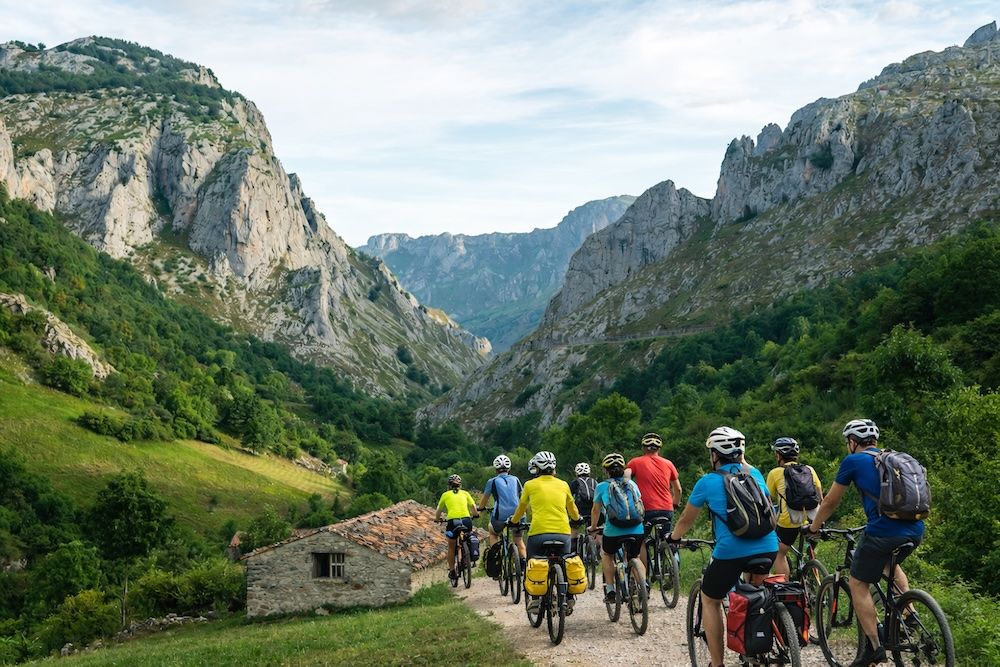
Photo by Javier Rincón on Unsplash + AI
The Picos de Europa don’t behave like most mountain ranges. They rise fast and abruptly, a compact wall of limestone only around 20 kilometres from the Cantabrian coast, where beach light and Atlantic weather can be part of the same view as jagged summits and plunging gorges. Time Out recently crowned the Picos de Europa the world’s most beautiful place, praising that rare collision of sea, cliff and high mountains—and it’s exactly the kind of geography that makes cycling here feel cinematic rather than merely scenic.
On a bike, the Picos are a study in contrasts: dark beech forests that open onto bright, grassy high pastures; shaded gorges where a river runs alongside the road; and sudden viewpoints that make you unclip just to stare. Riders come for the climbing—steep, irregular ramps are common—but stay for the quiet. Many routes use secondary roads with surprisingly smooth tarmac, and outside the main valley corridors you’ll often hear more cowbells than engines. The catch is the climate: this is Atlantic Spain, so even in summer you should expect quickly changing conditions and pack for rain as well as sun.
Ride 1: Lagos de Covadonga—the climb with a legend attached.
If there’s a single ascent that defines cycling in the Picos, it’s Lagos de Covadonga, a Vuelta a España staple that threads through the national park to the glacial lakes above Covadonga. The appeal isn’t just the altitude; it’s the way the gradients keep changing, forcing you to ride by feel rather than numbers, while the scenery grows more dramatic with each switchback. At the top, the lakes (Enol and Ercina) deliver the kind of reflective, high-mountain calm that makes the suffering feel oddly tidy and justified. In peak summer there are traffic restrictions for private cars at certain times, which can make the upper road noticeably more pleasant for cyclists—still, be ready for buses and for crowds near the viewpoints.
Ride 2: Into Liébana via the Desfiladero de la Hermida.
Approaching from Cantabria, the Desfiladero de la Hermida is a natural gateway to the mountains: a long limestone gorge carved by the River Deva, where the road and cliffs squeeze together and the light flickers in and out through short tunnels. It’s visually unforgettable, but it’s also a place to ride defensively—stay visible, hold your line, and consider starting early to avoid heavier traffic. Once you emerge into the warmer bowl of Liébana, the town of Potes makes a natural base for loop rides: one day you can spin through vineyards and villages, the next you can aim for bigger passes such as Puerto de San Glorio for a longer, steadier climb profile.
Ride 3: Fuente Dé and the high-valley loop.
Even if you’re not taking a bike onto the cable car, Fuente Dé is worth putting on your route map. The road up the valley is a steady, beautiful approach through meadows and villages like Espinama, with the feeling of riding into a stone amphitheatre. It’s an ideal “reset” day between bigger efforts: enough elevation to keep things interesting, but with plenty of places to pause for coffee, refill bottles, and watch the mountains change colour as clouds pass. If you’re travelling with riders of different fitness levels, this side of the park is also handy for building shorter out-and-back rides or adding extra climbs as optional loops.
When to go and what to bring.
For most cyclists, late spring and early summer (roughly May to June) and early autumn (September into October) strike the best balance: comfortable temperatures for long climbs, greener landscapes or autumn colour, and fewer visitors than peak July and August. Mid-summer can be excellent too—warm but rarely scorching in the mountains—yet the popular hotspots can feel busy, and afternoon storms are always a possibility. Whatever month you choose, treat the Picos like proper mountains: carry a packable waterproof, arm warmers, and a little more food than you think you’ll need. Long valleys can lull you into underdressing, then a shaded gorge or a windy viewpoint can change the day in minutes.
Ride with care (and you’ll be welcomed back).
Much of what makes the Picos special is how lived-in they are: grazing cattle on high pastures, working villages in the valleys, and a national park that protects sensitive habitats. Stick to public roads and clearly permitted tracks, ride slowly through hamlets, and treat livestock gates and private land with respect. Keep noise down, take your litter with you, and if you’re travelling in a group, regroup in safe pull-outs rather than on blind bends. It’s simple etiquette—but in a landscape this tight and dramatic, it’s also the difference between a ride that feels harmonious and one that feels intrusive.
♢♢♢
Time Out’s “most beautiful place in the world” headline may be what brings new eyes to the Picos de Europa, but the bike is what makes the beauty feel earned. Every kilometre here is tactile: damp air turning to sun, gradients pitching unexpectedly, and views arriving as rewards rather than backdrops. Come for the marquee climbs like Lagos de Covadonga, stay for the gorge roads and the quiet valleys around Potes and Fuente Dé—and leave a little space, in your itinerary and in your riding, for the mountains to surprise you.
From the Editor:
20 Great Bike Tours in the Picos de Europa for you to choose from
The bike tours listed below are not ranked in order but the results are heavily weighted towards tours or operators that I can vouch for and can be confident of having a successful (if not amazing!) trip where you are looked after at least as well as the listing implies.
You can also use the filters to reduce the list (e.g. by guided tours, family tours, easy tours or many more).
Another source of good independent opinions is reviews from fellow cycle tourists. Why not share your opinion when you get home?
0 Results Found
Filter Bike Tours
Filter by keyword
< 0 days
30+ days