
Bike Tours in Morocco: The Best and the Rest
A look at the regions, riding styles and local know-how behind Morocco's growing bike tour scene.
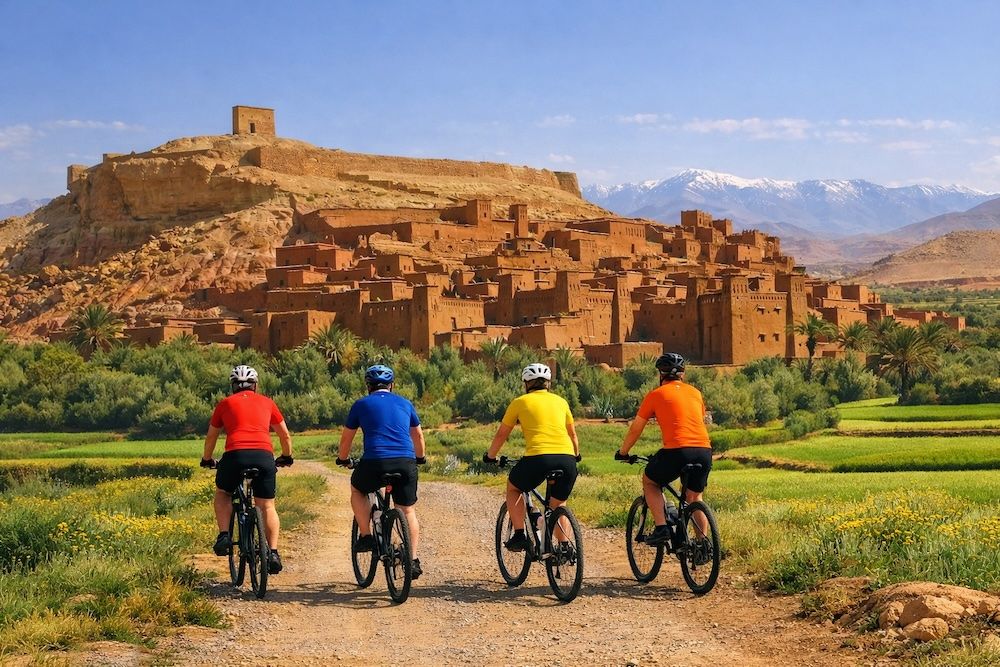
Image by gavilla from Pixabay + AI
<br.
Morocco has quietly become one of the standout cycling destinations within easy reach of Europe. Snow-capped passes, kasbah-lined valleys, desert dunes and a coastline dotted with fishing towns all sit within a few hours of Marrakech, and a growing number of tour operators have built trips around that variety. Looking across the Morocco listings on cycletoursglobal.com, a clear pattern emerges in where these tours go and how they ride. Here's a guide to the standout routes, what else is on offer, and a few tips for anyone about to pedal it themselves.
Why choose Morocco, and who it appeals to
Morocco packs an unusual amount of variety into a single trip. Riders can climb 2,000-metre-plus passes in the High Atlas, cross Sahara dune corridors, and freewheel down to the Atlantic coast, often within the same fortnight. Add short flight times from Europe, a well-established tour infrastructure, and food and hospitality that regularly rate as trip highlights in their own right, and it's easy to see why operators have expanded their Morocco ranges in recent years.
The country suits a wide range of riders rather than one type. Gravel riders get some of the best terrain currently on offer anywhere, with sealed roads, mountain tracks and valley trails all in the one ride. Road cyclists come specifically for the big tarmac climbs, such as Tizi n'Tichka and Tizi n'Test. Experienced mountain bikers are drawn to the technical singletrack around the Toubkal massif. Those after a bigger physical and cultural challenge look to the Sahara crossings, while riders wanting a gentler introduction, including families and first-time tourers, are well served by mixed on and off-road trips with vehicle support. There are also women-only departures, self-guided and private options, and everything from budget guesthouse trips to genuinely luxury riad-based holidays.
The best routes
The Atlas to Sahara gravel crossing. A multi-day gravel route running from the High Atlas Mountains down into the desert plateaus to the south, taking in Berber villages and kasbah towns such as Ait Benhaddou and Telouet along the way. Typically five to seven riding days and 400 to 550km with vehicle support, it's become something of a benchmark Morocco route, since gravel handles the mix of sealed roads, mountain tracks and valley trails better than a pure road or off-road setup.
The Sahara desert expedition. A remote, self-sufficient crossing through dune corridors such as Erg Chigaga, often including a stretch of salt flat and several consecutive days without phone signal or settlements. Built around mobile fly-camps rather than fixed accommodation, this is Morocco's most demanding and immersive route, suited to riders after a genuine expedition rather than a supported holiday.
The grand traverse. A longer, multi-stage route linking Morocco's coast and interior, typically running Casablanca to Fez, then on to Marrakesh and back, via the Atlantic coast and the Rif Mountains. Covering up to 700km per stage and often bookable in full or by stage, it's the most complete way to take in Morocco's range of landscapes in one trip.
The High Atlas road climb. A road route from Marrakech through the High and Anti-Atlas mountains to the coast, covering classic climbs such as Tizi n'Tichka and Tizi n'Test on largely traffic-free roads. Daily distances of 70 to 90km make it the clearest option for road cyclists chasing Morocco's climbing without leaving tarmac.
Other routes to consider
The Atlas gravel and culture loop. A shorter loop out of Marrakech over the Tizi n'Tichka pass to Ait Benhaddou, mixing gravel and road with cultural stops and a night of mountain camping. A good introduction to Morocco's terrain without the distance of a full crossing.
Technical singletrack around Toubkal. Expert-level mountain biking on ridge trails and singletrack around the Toubkal massif, including passes above 3,000m. Best suited to confident technical riders rather than a first Morocco trip.
The coastal road to Essaouira. A mostly tarmac route from the Atlas foothills down to the coast via Paradise Valley, finishing in Essaouira. E-bike hire is often available, making it a good middle-ground option for riders after scenery and culture over technical difficulty.
Women-only and small-group departures. Gravel routes through the western High Atlas run as women-only departures on some tours, typically with a female lead guide and a relaxed, no-drop pace, alongside broader small-group and private options.
Bike-and-adventure combinations. Routes that pair a few days of cycling with hiking, cooking classes or cultural visits, such as riding through valley villages before hiking to the base of Toubkal. Suited to travellers who want cycling as part of a broader trip rather than the sole focus.
The northern coastal route. A route through Casablanca, Rabat and the blue-washed town of Chefchaouen into the Rif Mountains, for those who want Morocco's northern landscapes without committing to a full multi-stage tour.
Cycling tips
Time it for spring or autumn. March to May and September to November offer the best balance of rideable temperatures and clear mountain access. Summer heat below altitude gets extreme, and the high passes can carry snow through winter.
Choose a gravel or touring bike over a pure road bike. Even on tours described as road cycling, surfaces vary enough that wider tyres pay off. Several operators note that a pure road setup is too harsh for Morocco's back roads.
Respect the altitude. Passes such as Tizi n'Tichka (2,260m) and Tizi n'Test (2,100m) are long climbs, and Toubkal itself reaches over 4,000m. Build in acclimatisation and expect mountain weather to change quickly, even in the warmer months.
Dress modestly. Loose, lightweight clothing is more appropriate than tight lycra away from tourist hubs, and it does a better job against the sun regardless.
Give traffic a wide berth where you can. Drivers are generally unhurried but will overtake in tight spots, and cyclists get treated much like pedestrians or pack animals on the road. Quieter back roads are worth the detour.
Carry water and expect simple, excellent food. Tagines, couscous and fresh bread are the mainstays, and mint tea (sometimes called Berber whiskey) is everywhere. Bring a reusable bottle or hydration system, particularly for desert and high-altitude stretches where refill points are scarce.
Go guided if you're not experienced with remote touring. Distances between towns, language differences and the isolation of the Atlas and Sahara routes are exactly why most operators build in vehicle support, a chef and a local guide. It's less about difficulty and more about not wanting to be stranded a long way from help.
♢♢♢
Morocco rewards cyclists who come for more than one type of riding. Whether that's a week of gravel through the Atlas, a road trip over its big passes, or a desert crossing that ends in a fly-camp under the stars, the range of tours now on offer means the hardest part is picking one.
Explore the full range of bike tours in Morocco listed below.
Read the Reviews
Many tour listings include traveller reviews covering pace, food, cabin comfort and guide quality. It's worth reading a few before booking. Once you've completed your own trip, we'd love for you to find your tour add your review too. It genuinely helps future travellers choose the right tour.
Related pages
Want to dig deeper or range wider before you book? These guides cover the details:
0 Results Found
Filter Bike Tours
Filter by keyword
< 0 days
30+ days