
Bike Tours in the Douro Valley: the Best and the Rest
Where vineyard roads, river views and serious climbs make Portugal’s wine country a cyclist’s dream
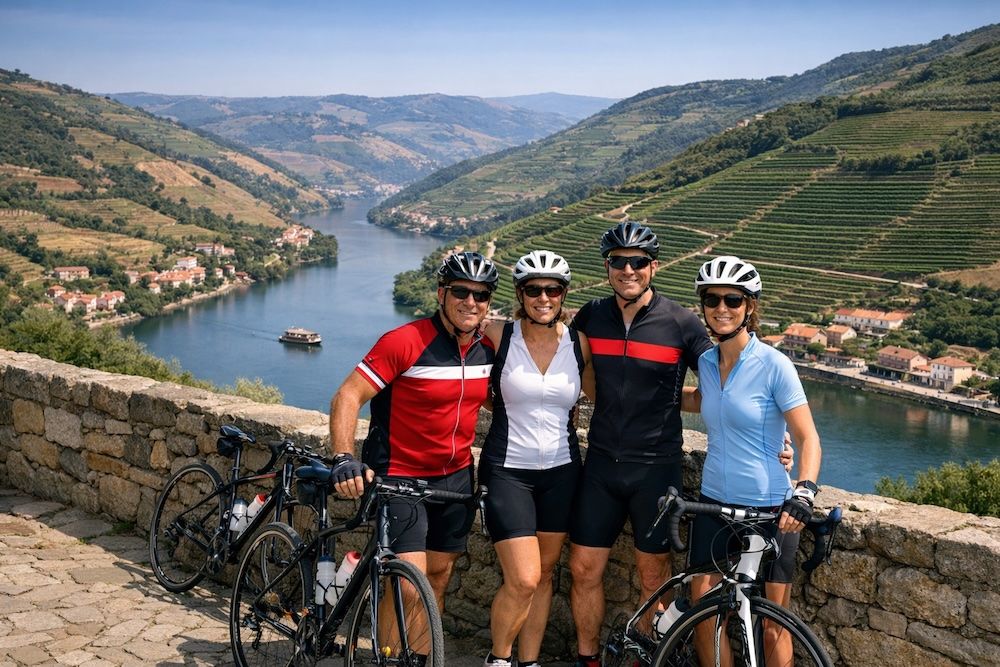
Copilot AI
The Douro Valley is one of Europe’s great cycling landscapes: a deep river corridor stitched with vineyard terraces, whitewashed villages, stone-walled lanes and dramatic viewpoints. It is also a place where the riding can change quickly. A gentle riverside spin can become a serious climb within minutes, and a short distance on the map may hide a testing amount of elevation. That contrast is exactly what makes the region so rewarding by bike.
For riders, the Douro is not just a wine destination with bicycles added on. Its roads are part of the experience: sweeping bends above the river, quiet approaches to quintas, switchbacks through schist hillsides, and small towns where a coffee stop can easily become the highlight of the day. The best bike tours balance scenery, gradients, cultural stops and logistics, while the rest are still worthwhile if matched to the right rider.
Why You Should Go
The Douro Valley is a UNESCO-listed wine landscape and one of the world’s oldest demarcated wine regions. Terraced vineyards climb steeply from the river, creating a visual rhythm that is especially striking from the saddle. Unlike busier European cycling destinations, much of the Douro feels quiet and rural, with long stretches where the soundscape is tyres on tarmac, birdsong and the occasional tractor.
The region also rewards different styles of travel. Strong road cyclists come for the climbs and views; leisure riders come for e-bikes, wine estates and short point-to-point days; gravel riders find farm tracks, back lanes and rougher vineyard approaches; and touring cyclists can connect Porto, Peso da Régua, Pinhão, Alijó, Lamego and Vila Nova de Foz Côa into a multi-day journey.
The Best Bike Routes in the Douro valley
Peso da Régua to Pinhão on the N222
- This is the headline ride for many visitors and the route most likely to convert a curious traveller into a Douro cycling obsessive. The road follows the river between Peso da Régua and Pinhão, passing vineyard slopes, river bends and classic viewpoints. It is scenic without being overly complicated, which makes it ideal for first-timers, guided day tours and e-bike riders.
Best for: first Douro ride, photography, wine-country scenery, mixed-ability groups.
Watch out for: traffic at busy times and the temptation to underestimate the rolling profile.
Pinhão to São João da Pesqueira
- For riders who want a more demanding day, the climb out of Pinhão towards São João da Pesqueira delivers the full Douro experience: steep vineyard slopes, broad river views and a sense of moving from the valley floor into the high wine country. The reward is a quieter, more expansive perspective on the region.
Best for: confident road cyclists, e-bike riders who want a challenge, viewpoint hunters.
Watch out for: sustained climbing, heat exposure and limited services between villages.
Peso da Régua to Lamego
- This route swaps riverside drama for a cultural climb. Lamego is one of the Douro’s most rewarding towns, known for its historic centre and the monumental stairway of the Sanctuary of Nossa Senhora dos Remédios. The ride from Régua gains height steadily, making it a satisfying half-day or part of a longer loop.
Best for: culture, town stops, riders who like a defined climb with a clear destination.
Watch out for: traffic near towns and warm afternoon ascents.
Alijó, Favaios and Pinhão
- Starting higher in the hills changes the character of the ride. Around Alijó and Favaios, the roads move through vineyards, orchards and quieter villages before descending towards Pinhão. This is an excellent route for riders who want fewer crowds, a strong sense of local life and the option to include wine and food stops without building the whole day around the river.
Best for: quiet roads, food and wine, e-bike tours, relaxed multi-day itineraries.
Watch out for: fast descents and route-finding on smaller roads.
Other Routes to Consider
- Vila Real to Lamego via the N2: The N2 is Portugal’s famous north-south road, and the Douro section gives touring cyclists a strong sense of crossing the country rather than simply looping through wine villages. Expect varied terrain, town approaches and broader landscapes beyond the immediate river corridor.
- Pinhão to Vila Nova de Foz Côa: This longer option heads deeper into the upper Douro and towards the Côa Valley, where the landscape feels drier, wider and more remote. It is best suited to multi-day riders or those with vehicle support, but it offers a memorable sense of progression from classic vineyard scenery into a more rugged interior.
- Régua Riverbank Loops: Shorter loops around Peso da Régua can work well for travellers with limited time, families on e-bikes or riders who want to combine cycling with a boat trip, railway journey or winery visit. These are not always the most spectacular rides, but they are practical, accessible and easy to fit into a wider Douro itinerary.
- Village and Quinta Access Roads: Some of the most atmospheric riding happens on small roads that connect villages, vineyards and wine estates. These routes are often too minor to be famous, but they can be the best choice for guided tours because local knowledge helps avoid dead ends, poor surfaces and punishing gradients.
Tips for Cycling in the Douro Valley
- When to go
- The best seasons are generally spring and autumn. March to June brings blossom, green vines and milder temperatures, while September to November brings harvest energy, golden light and changing vineyard colours. Summer can be beautiful but hot, especially away from the river and on exposed climbs.
- Choose the right bike for the terrain
- E-bikes are an excellent choice for the Douro because they make the climbs more manageable without taking away the pleasure of riding through the landscape. If you are on a standard road or hybrid bike, make sure it has low enough gearing for sustained ascents rather than being set up only for flat speed.
- Plan around elevation, not distance
- A short ride in the Douro can still be demanding. The difference between a relaxed riverside route and a strenuous day is often the amount of climbing, not the number of kilometres. Before committing to a route, check the elevation profile and be realistic about how much climbing your group will enjoy.
- Start early and avoid the hottest climbs
- Mornings are usually the best time to ride. The light is softer, the roads are quieter and the temperatures are easier to manage. In warmer months, try to avoid long exposed climbs in the middle of the day, especially away from the river where shade can be limited.
- Build in time for stops
- The Douro is not a place to rush. Viewpoints, village cafés, river crossings and wine estates all deserve time. A good itinerary should leave space for unplanned pauses as well as scheduled tastings or meals. If wine is part of the day, keep tastings modest while riding and save bigger visits for after the cycling is finished.
- Do not rely on services between villages
- Carry more water and snacks than you think you will need, particularly on hillier routes and in warmer weather. Some villages have cafés or small shops, but opening hours can be irregular and distances between reliable stops may feel longer once climbing is involved.
How to Choose a Bike Tour
Choose a guided tour if you want route confidence, wine estate access, mechanical backup and a social element. Choose a self-guided tour if you prefer independence but still want luggage transfers, accommodation planning and GPS routes. Choose a single-day tour if you are staying in Porto or Régua and want a taste of the valley without committing to a full cycling holiday.
When comparing tours, look closely at daily elevation rather than distance alone. A 35-kilometre Douro ride can be easy, moderate or strenuous depending on whether it follows the river or climbs to a viewpoint village. Also check whether bikes are included, whether e-bikes are available, how luggage is handled, and whether wine tastings are built into the day or left as optional extras.
♢♢♢
The best Douro Valley bike tour is the one that includes the river road between Peso da Régua and Pinhão, adds at least one climb into the vineyards, and leaves time for a village, viewpoint or wine estate stop. For many travellers, that means an e-bike tour with thoughtful logistics. For stronger riders, it means a road route that climbs from Pinhão or links multiple valley towns over several days.
The rest are not second-rate so much as more specialised. The N2 is better for tourers than casual cyclists; upper Douro routes suit riders who like remoteness; gravel options reward the adventurous but require planning; and short riverbank loops are useful for time-poor visitors. In the Douro, the trick is not finding a beautiful ride. It is choosing the right route, pacing it sensibly and giving yourself enough time to enjoy the valley rather than simply get through it.
From the Editor:
35 Great Bike Tours in the Douro Valley for you to choose from
The bike tours listed below are not ranked in order but the results are heavily weighted towards tours or operators that I can vouch for and can be confident of having a successful (if not amazing!) trip where you are looked after at least as well as the listing implies.
You can also use the filters to reduce the list (e.g. by guided tours, family tours, easy tours or many more).
Another source of good independent opinions is reviews from fellow cycle tourists. Why not share your opinion when you get home?
Related pages:
0 Results Found
Filter Bike Tours
Filter by keyword
< 0 days
30+ days